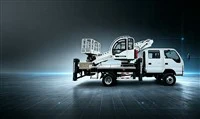


Working at heights is a relatively common or frequent high-risk or special operation (also known as hazardous work) for many of our companies, and it is one of the special operations that EHS professionals must prioritize in their management and oversight. Mobile elevating work platforms (MEWPs), also known as aerial work platforms, are the safety equipment most commonly used when performing work at heights. Therefore, the safety and proper use of mobile elevating work platforms have become a top priority and a critical element of our safety management efforts.
First Question: Do aerial work platforms need to be registered as special equipment after they are put into service? Do operators of aerial work platforms need to hold a special equipment operator's certificate?
Response: Based on the current Catalog of Special Equipment (Announcement of the General Administration of Quality Supervision, Inspection and Quarantine on the Revision of the "Catalog of Special Equipment" (AQSIQ Announcement No. 114 of 2014)), it is clear that aerial work platforms are not classified as special equipment. Therefore, they do not require registration as special equipment, and operators of aerial work platforms are not required to hold a special equipment operator's certificate.
Second Question: Are workers operating aerial work platforms required to hold a Special Operations Certificate for Work at Heights?

Answer: Based on the current Catalog of Special Operations (Regulations on the Safety and Technical Training and Assessment of Special Operations Personnel (Order No. 30 of the State Administration of Work Safety)), workers performing the types of work at heights shown in the screenshot below using aerial work platforms must hold a Special Operations Certificate for Work at Heights.
Question 3: What is the frequency of daily inspections and maintenance for aerial work platforms? What qualification requirements apply to organizations performing routine maintenance?
Answer: Based on the <Safety Rules for Mobile Aerial Work Platforms-Inspection, Maintenance, and Operation (GB/T 27548-2011)>, <Safety Rules for Elevating Work Platforms (GB 40160-2021)> and <Safety Procedures for the Use of Lifting Work Platforms (GB/T 39747-2021)>, as well as the manufacturer's manual, daily inspections and maintenance should include at least the following types of tasks:
Pre-use Inspection
Before use, operators shall conduct a pre-use inspection in accordance with the aforementioned national standards and the manufacturer's instructions.
Periodic Inspection and Maintenance
Periodic inspections and maintenance shall be performed by personnel qualified to inspect this model of equipment (holding a manufacturer's training certificate; these may be in-house staff or the manufacturer's technical maintenance personnel) in accordance with the intervals and procedures specified by the manufacturer. While several national standards do not specify exact frequency requirements, they all require compliance with the manufacturer's recommendations; quarterly inspections are recommended.
Annual Inspection or Comprehensive Inspection
Based on the three national standards mentioned above, the equipment should undergo an annual inspection or comprehensive inspection once a year. The annual inspection should be performed by personnel qualified to inspect this model of equipment (holding a manufacturer's training certificate; these may be in-house staff or the manufacturer's technical maintenance personnel). The annual inspection should include all items covered in the periodic inspections and those listed by the manufacturer, and an inspection report should be submitted to the administrator.