

Product Overview
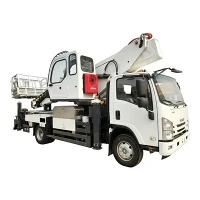
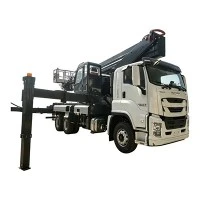
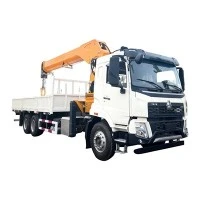
A vehicle mounted platform is a mobile aerial work device that integrates an elevating work platform onto a truck, light truck, or battery vehicle chassis. Utilizing the vehicle's engine power via power take-off (PTO) or battery DC power, it drives the hydraulic system for platform lifting, rotation, and mobility. Widely used in municipal streetlight maintenance, power line inspection, telecommunications installation, tree trimming, construction sites, airports, stations, and warehouses – particularly suited for wide-area, high-mobility aerial operations.


Key Advantages
1. Multiple Platform Types – Flexible Adaptation
Vehicle-mounted platforms are available in various configurations:
- Telescopic Boom: Multi-section extendable boom, wide working range – ideal for straight vertical access
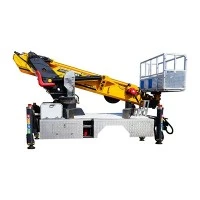
- Articulating Boom: Strong obstacle clearance, can reach around obstacles – ideal for complex, obstacle-rich environments
-
Vertical Mast: Platform raises along vertical axis – compact design for confined spaces
2. Safety & Stability – Multi-Layer Protection
Vehicle-mounted platforms incorporate comprehensive safety systems:
H-Type Hydraulic Outriggers: Deployed during operation to ensure stability and safety. Some models feature automatic telescoping or manual outriggers for flexible operation
Intelligent Control Systems: Tilt alarms, limit self-locking, emergency stop functions
Pilot-Operated Check Valves (Hydraulic Locks): Automatic lock in case of hose rupture – prevents sudden platform descent
Balance Valves: Maintains smooth descent – descent speed unaffected by load changes
Overload Audio Alarm: Automatic alarm and shutdown when platform load exceeds rated capacity
Safety Guardrails: Platform guardrails ensure operator safety
Low-Voltage Control Panel: Safe operation for efficient aerial work
3. Dual Controls – Convenient & Efficient
Most vehicle-mounted platforms feature both ground controls and platform controls for flexible operation from different positions. Electro-hydraulic proportional control for simple, precise operation. Low-voltage control (12V/24V/36V/48V) for safety.
Key Applications
Municipal Maintenance: Streetlight repair, traffic signal maintenance, road sign installation
Power Sector: Power line inspection, transformer service, field maintenance
Telecommunications: Base station installation and maintenance
Construction: Exterior finishing, steel structure installation
Landscaping: Tree trimming, roadside vegetation maintenance
Warehousing & Logistics: High-bay rack maintenance, facility service
Airports, Stations, Stadiums: Equipment maintenance, lighting service, pedestrian-dense areas
Cold Storage & Emission-Sensitive Environments: Battery-powered platforms (zero emissions)
Usage & Care
Pre-Operation Check: Daily inspection of hydraulic oil level, outrigger condition, and control system function
Outrigger Setup: All outriggers must be fully deployed on solid ground or pads before any platform operation – never operate without outriggers deployed
Platform Operation: Smooth, steady movements – avoid sudden stops and never exceed load limits
Travel Mode: Platform must be fully lowered and secured; outriggers fully stowed before road travel
Scheduled Maintenance: Follow chassis and upper manufacturer maintenance schedules – hydraulic oil changes, filter replacement, safety system testing
Electrical Safety: Only qualified personnel should handle electrical components – risk of electric shock or misconnection
Hydraulic Safety: Never adjust relief valves arbitrarily; depressurize before servicing hydraulic systems
Battery Maintenance (Battery Models): Follow charge/discharge management per manual to extend battery life
FAQ
Q1: What's the difference between vehicle-mounted and self-propelled platforms?
A1: Vehicle-mounted platforms use truck/battery vehicle chassis with vehicle power for lifting – offering long-distance mobility. Self-propelled units have integral chassis with onboard drive – more maneuverable on-site but limited in travel range.
Q2: Is a vehicle-mounted platform required to be licensed?
A2: Yes. These are classified as special-purpose vehicles and must pass MIIT type approval and be registered for road use.
Q3: How high can a vehicle-mounted platform reach?
A3: Common models cover 4m to 28m+ working heights. Select based on your specific height requirements.
Q4: Must all outriggers be deployed before operation?
A4: Yes. All outriggers must be fully extended on solid ground or pads to ensure level stability before any platform operation.



Hot Tags: vehicle mounted platform, China vehicle mounted platform manufacturers, suppliers, factory, 45m truck mounted aerial work platform, Aerial Work Platform Truck, Aerial Work Platform Truck ISUZU, ISUZU Vehicle Mounted Boom Lift, Telescopic Boom Aerial Work Platform, Vehicle Mounted Platform